Thick black smoke poured from the windows, and panicked neighbors gathered in the street, screaming that someone was still trapped inside. Among the firefighters who rushed toward the inferno was Patrick — a quiet man known among his colleagues for one thing: he never hesitated when someone’s life was at stake.
That night, hesitation could have cost a woman her life.
The heat was unbearable even outside the building. Pieces of burning debris fell from the roof as firefighters fought to control the growing fire. Through the smoke, Patrick heard faint cries coming from the third floor. Witnesses later said the staircase had already begun to collapse, and entering the building seemed almost impossible. But Patrick didn’t wait for permission or reassurance. With oxygen mask secured and determination in his eyes, he ran inside.
Inside the building, visibility was nearly zero. Flames crawled along the walls and ceiling like living creatures. Patrick pushed through the corridor, following the desperate sound of coughing and cries for help. In the final apartment at the end of the hallway, he found the woman — unconscious, trapped between fallen furniture and burning debris.
Time was running out.
Patrick lifted her onto his shoulders and began the dangerous journey back through the smoke-filled corridor. But just as he reached the stairwell, part of the ceiling collapsed. Burning fragments struck his helmet and shoulders. The intense heat ripped through his protective gear. Despite the pain, he refused to stop.
Moments later, witnesses outside saw a firefighter emerge from the building carrying the woman in his arms. She was alive. Patrick collapsed just seconds after reaching safety.
The rescue was called heroic. Newspapers praised his courage. The woman he saved survived and later described him as the man who gave her a second life.
But Patrick paid a terrible price.
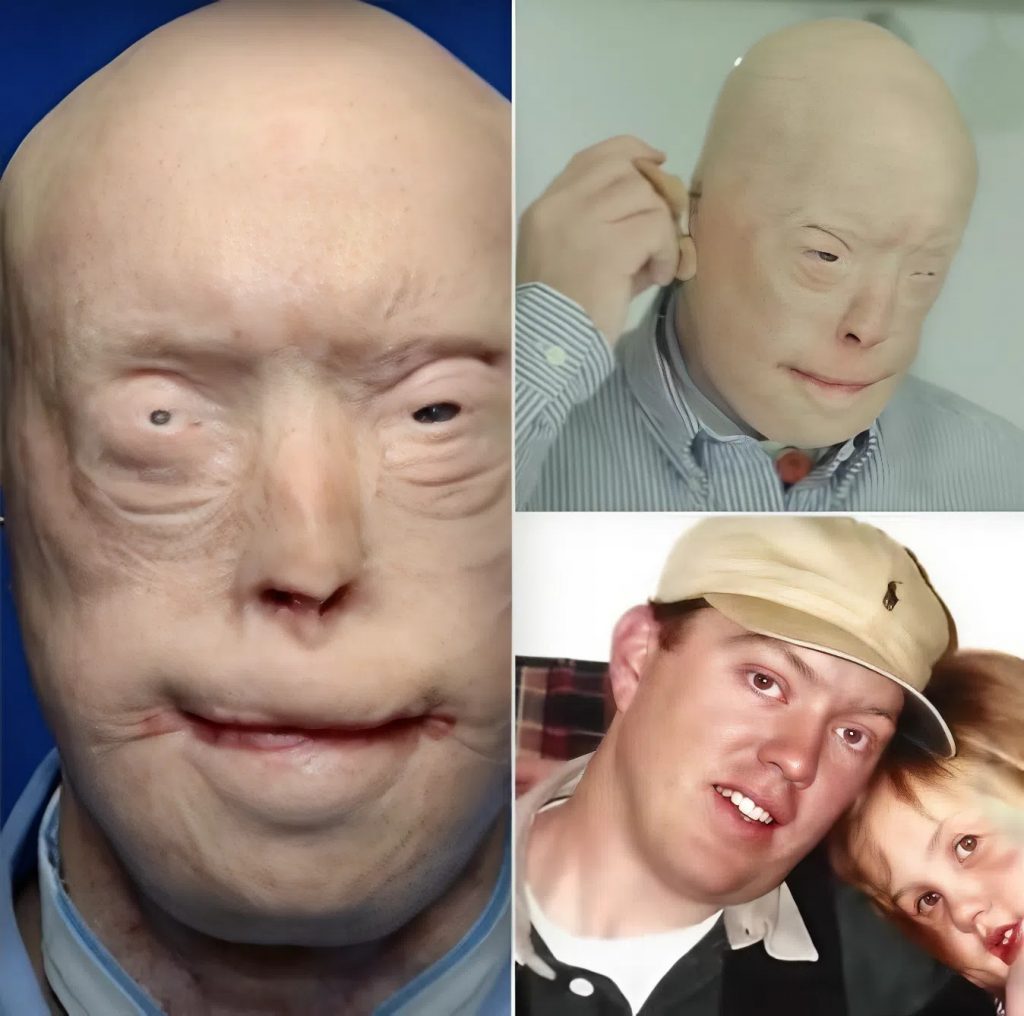
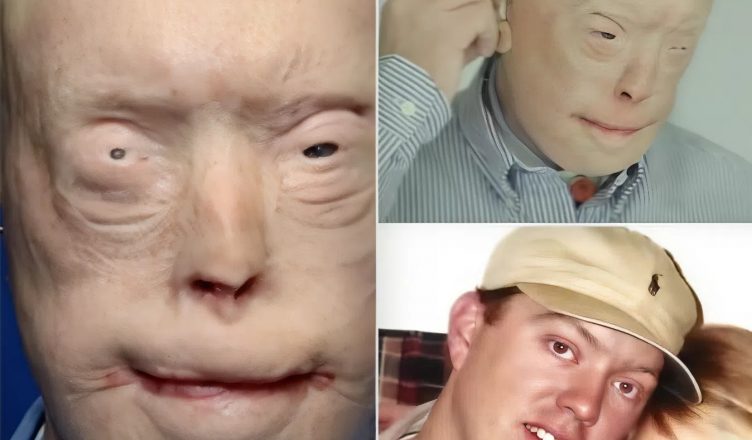
The burns he suffered were catastrophic. Large portions of his face were severely damaged by the heat and flames. Doctors fought for weeks to stabilize his condition. When he finally awoke in the hospital, the reality of what had happened slowly began to sink in.
His life would never be the same.
Years followed that few people could truly understand. Patrick avoided mirrors. He rarely went outside. When he did, he wore baseball caps pulled low over his face, dark sunglasses, and specially made prosthetic ears. Even simple activities — walking into a grocery store, sitting in a café, meeting strangers — became emotionally exhausting.
Children sometimes stared. Adults often tried not to.
Patrick once admitted that the hardest part wasn’t the physical pain, but the feeling that people no longer saw the person he used to be.
Still, he refused to let bitterness define him.
Over time, doctors began discussing a possibility that once sounded like science fiction — a full face transplant. It would be an incredibly complex operation, one that only a handful of medical teams in the world had ever attempted. The risks were enormous. The surgery could last more than a day, and even then there were no guarantees.
But Patrick decided to try.
After years of preparation, medical evaluations, and waiting for a compatible donor, the moment finally came. A team of more than 80 surgeons, nurses, and specialists gathered for what would become one of the most ambitious transplant surgeries ever performed.
For more than 30 hours, the operating room lights never dimmed.
Surgeons carefully connected tiny blood vessels, nerves, muscles, and skin — millimeter by millimeter — attempting to rebuild an entirely new face. Every movement required extreme precision. One small mistake could jeopardize the entire transplant.
When the surgery finally ended, the medical team held their breath.
Patrick had survived.
The weeks that followed were critical. Doctors monitored his body constantly, ensuring the transplant was not rejected. Slowly, incredibly, the new tissue began to heal. Blood flowed normally. Nerves started responding.
And then came the moment Patrick had avoided for years.
Looking in the mirror.
Those present say the room fell completely silent. Patrick stared at his reflection for a long time, almost unable to believe what he was seeing. For the first time in many years, a human face looked back at him — not the scars of the fire that had once taken everything from him.
Recovery is still ongoing. Physical therapy, medications, and careful monitoring remain part of his daily routine. But something inside Patrick has already changed.
He no longer hides behind sunglasses and hats.
The man who once ran into a burning building to save a stranger is now stepping back into the world himself. His story has spread far beyond the hospital walls, inspiring people who have never even met him.