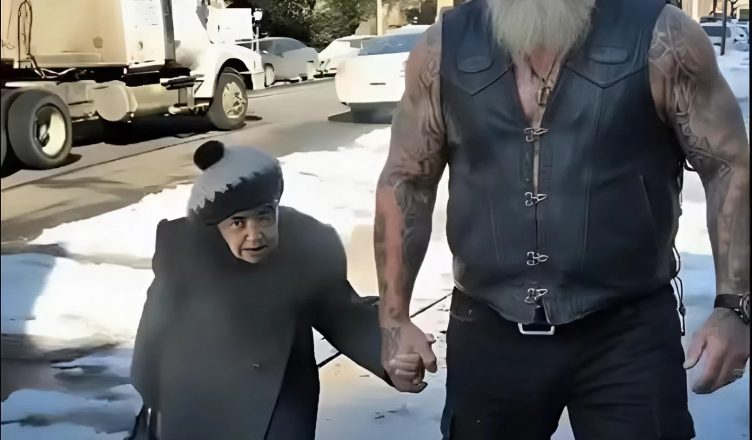
Michael gave a slightly awkward smile and rubbed his beard.
“Well… it sounds worse than it actually was,” he muttered.
But Dorothy raised her hand as if she was about to tell an important story.
“No, no… let our curious neighbor hear the whole thing,” she said with a warm smile.
I sat down, still confused, waiting to hear what really happened.
Dorothy took a sip of water and began.
It had happened about a month earlier. She had gone alone to the pharmacy to pick up her medication. These days she rarely went out, but sometimes she insisted on doing small errands herself. Because of Parkinson’s disease, her hands trembled constantly, and she held her purse tightly against her chest.
When she stepped outside the pharmacy, she noticed a man standing near a motorcycle.
That man was Michael.
“At first, I thought he was going to grab my purse and speed away,” Dorothy said calmly. “Honestly, I was ready to scream.”
But that’s not what happened.
Michael never touched her purse.
Instead, he said gently:
“Ma’am, it looks like you’re having trouble walking. Let me carry your groceries home for you.”
Dorothy looked at him with deep suspicion.
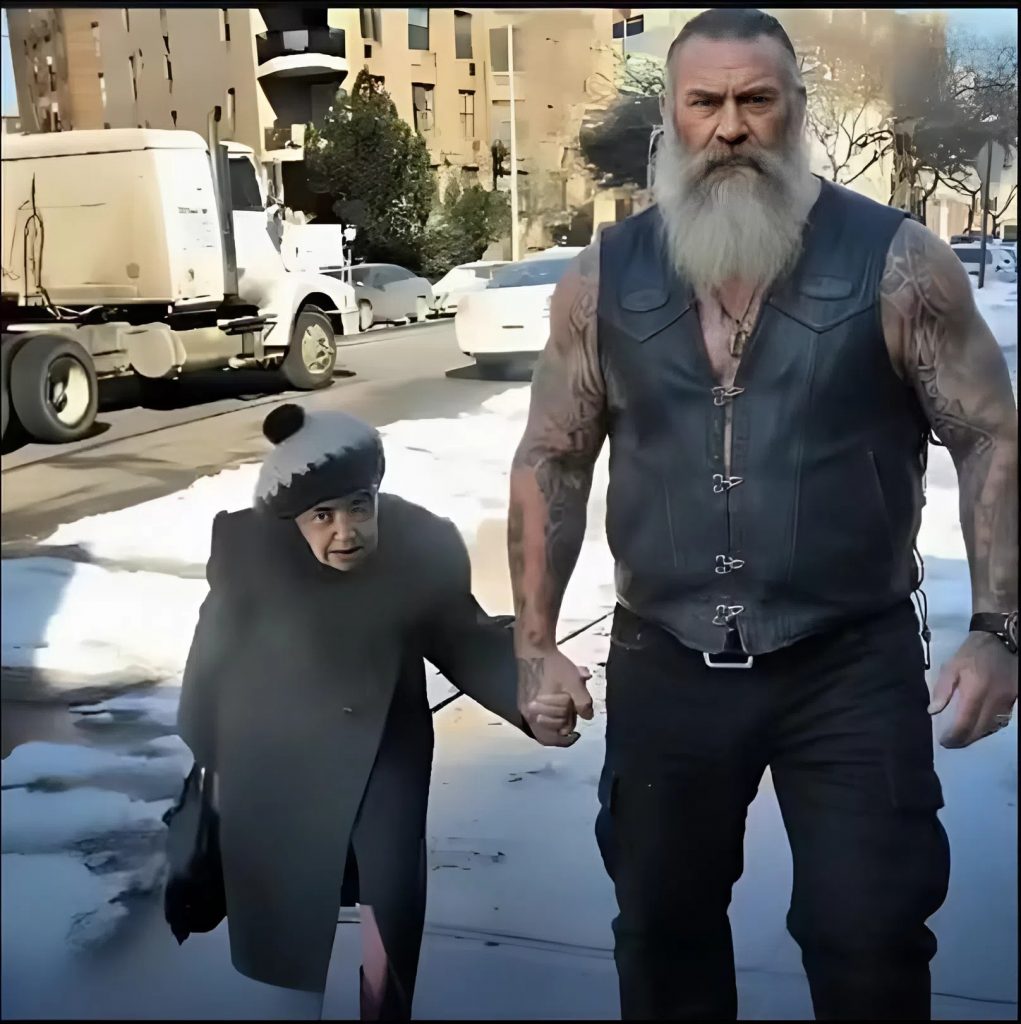
In front of her stood a typical biker: heavy boots, a leather vest, and tattoos running along his arms and neck. He looked more like someone who had just walked out of a noisy bar than someone offering help.
“I don’t trust people who look like you,” she told him bluntly.
Michael laughed.
“That’s fair,” he said. “But if I wanted to steal your purse, I’d already be gone.”
Dorothy stared at him for a few seconds… and then, unexpectedly, handed him the bag.
“Fine,” she said. “Carry it.”
They walked slowly. Dorothy took small steps, leaning on her cane. Michael stayed beside her the whole time and never once rushed her.
When they reached her building, she asked:
“How much do I owe you?”
Michael shrugged.
“Nothing.”
“Nothing?” she repeated in surprise.
“My mother passed away last year,” he said quietly. “She also had Parkinson’s. Sometimes I feel like I didn’t do enough for her.”
After those words, there was silence.
And that was the moment, Dorothy said, when she realized something important.
“People can look intimidating,” she explained softly. “But that doesn’t mean they have a bad heart.”
After that day, Michael started stopping by occasionally. At first just to bring groceries. Then he helped with heavier things around the apartment.
And eventually something happened that made Dorothy’s family furious.
She fired the home-care nurses from the agency.
When her daughter found out, she shouted over the phone:
“Mom, have you lost your mind? You let some biker into your home?!”
Her son reacted the same way.
“Mom, you don’t even know this guy! What if he steals from you?”
But Dorothy remained calm.
“And do you know me?” she asked quietly.
There was silence on the other end of the phone.
Because the truth was uncomfortable.
Her children visited only once every few months. Sometimes they called. Sometimes they forgot.
But that “dangerous biker” showed up every single day.
He cooked soup for her.
He reminded her to take her medication.
He fixed things around the apartment.
And sometimes he simply sat beside her and listened to stories about her late husband, George.
The most powerful moment came about two weeks later.
One evening I heard loud voices in the hallway and stepped outside.
Two well-dressed men were standing at Dorothy’s door — her sons. They had come to confront the situation.
When the door opened, they saw Michael.
Tall, broad-shouldered, wearing a leather vest covered with motorcycle club patches.
One of the sons immediately raised his voice.
“Who are you supposed to be?!”
Michael answered calmly.
“Someone who helps your mother.”
“We pay nurses to do that!”
That was when Dorothy said something I will never forget.
“No,” she said quietly. “You pay someone to be present. He helps because he actually cares.”
The room fell silent.
Her sons looked around.
A warm dinner was on the table. Her medication was neatly organized. The apartment was spotless.
And their mother… looked happy.
Maybe for the first time in a long time.
Finally, the older son asked more softly:
“You really trust him?”
Dorothy smiled.
“More than the people who were supposed to be here… but weren’t.”
Several months have passed since then.
Michael still visits almost every day.
Sometimes I see them sitting on the balcony laughing together. Sometimes he reads the newspaper to her because her hands shake too much to hold it.
And every time I hear the sound of his motorcycle in the courtyard, I think about one simple truth.