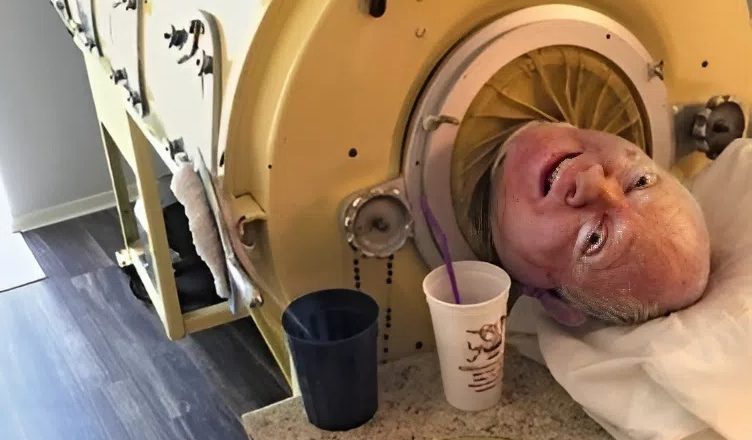
“Polio Paul,” has passed away. His life was not only marked by tragedy, but also by a rare and extraordinary resilience that few can truly comprehend.
It all began in 1952, during one of the most frightening periods of the polio epidemic. Paul was just six years old when the illness struck suddenly, turning his childhood into a battle for survival. Within days, he became almost completely paralyzed, able to move only parts of his head, neck, and mouth. For most, such a fate would mean the end of any normal life. For Paul, it became the beginning of something almost unimaginable.
His survival depended on a massive metal device — the iron lung. This machine, which mechanically controlled his breathing, became both his sanctuary and his prison. Imagine spending not days or months, but decades inside a steel chamber, where every breath is determined by the rhythm of a machine. Seventy years — an entire lifetime sustained within its cold walls.
Yet what makes Paul’s story truly powerful is not the suffering, but what he did despite it. He refused to disappear into silence. He studied, read extensively, communicated with the outside world, earned a law degree, and even became an author. While his body remained confined, his mind stayed remarkably free.
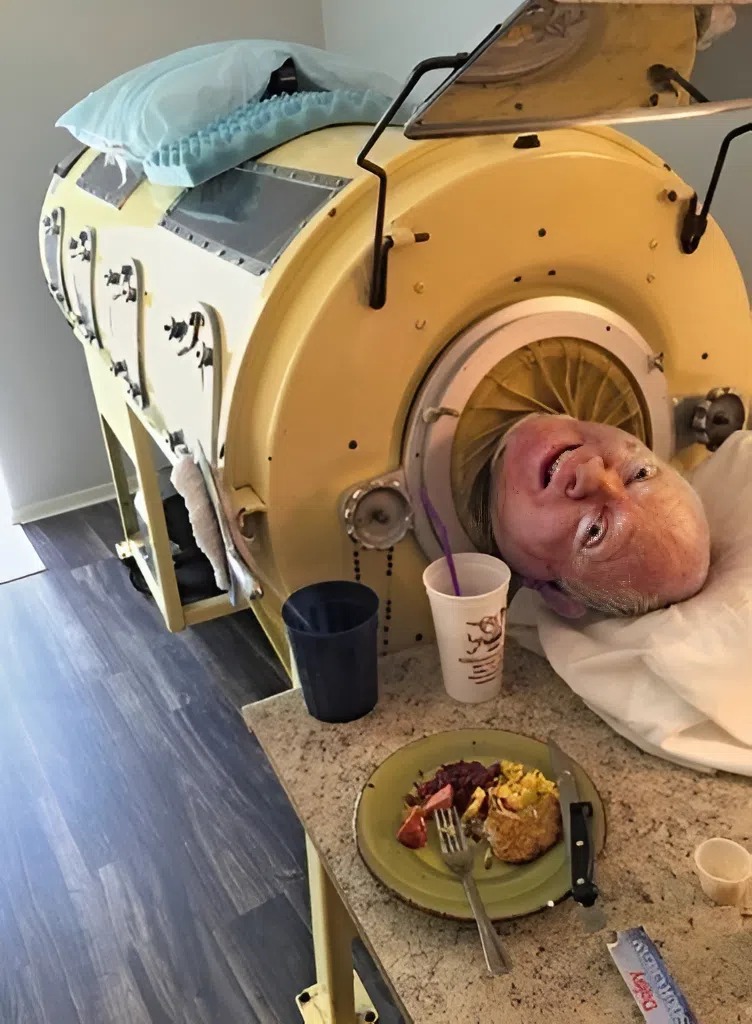
Many have wondered how he maintained the will to live under such conditions. The answer lies in his character. Paul possessed an inner strength that cannot be measured or taught. He joked, told stories, encouraged others, and inspired thousands — all without ever leaving the space that defined his physical existence.
His life serves as a powerful reminder of both the fragility of human existence and the depth of human endurance. In a world where people often complain about minor inconveniences, Paul’s story stands as a quiet but profound challenge — a lesson in what true struggle and perseverance really mean.
It is especially striking that he lived through decades of technological advancement, yet remained dependent on a device from another era. The iron lung, now almost obsolete, was still his reality until the very end. In many ways, he became a living connection to a time when medicine was still fighting to understand and control such devastating diseases.
Now he is gone. A man who relied on a machine to breathe, yet lived with more strength and purpose than many who are fully free. His story does not end with his passing — it remains, echoing as a testament to courage and the human spirit.
Paul Alexander’s death is more than just a loss; it feels like the closing of a chapter in history. His life forces us to pause, to reflect, and to reconsider what we often take for granted.
And in the silence he leaves behind, one question lingers: would we have had the strength to endure even a fraction of what he faced?