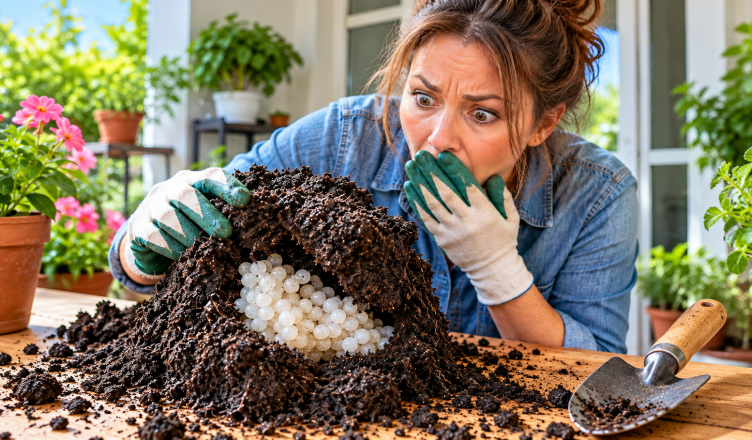
That day, I had no intention of digging up anything unusual. I simply wanted to tidy up a small patch of ground near the old fence, where the soil kept sinking after heavy rain. Grass barely grew there, so I decided to remove the top layer of soil, add some fresh earth, and plant a few hardy plants.
My shovel had barely gone into the ground when I noticed something white among the dark, damp soil.
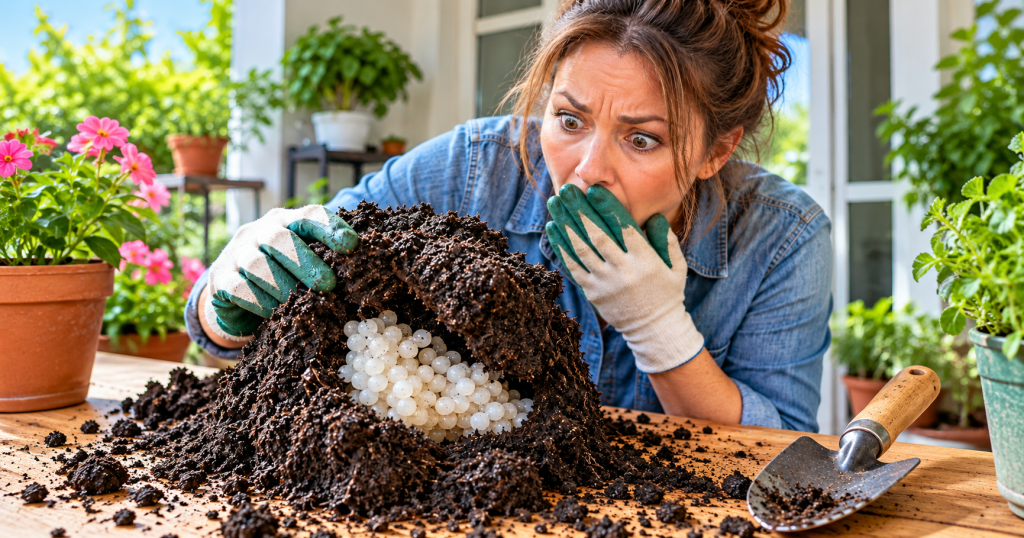
At first, I saw just one small ball. Then another. But when I carefully moved the soil aside, I discovered dozens of them.
They were clustered tightly together inside a small cavity about the depth of my palm.
My first thought was that the previous owners of the house had accidentally buried some plastic beads or pieces from an old children’s toy. The balls looked almost identical: pale, slightly translucent, and a little larger than ordinary peas.
But one thing immediately seemed strange.
If they were plastic, why would someone have buried them so neatly?
I put on my gardening gloves and gently touched one of the balls with my finger.
It was soft.
The surface gave way slightly under pressure and then returned to its original shape. It felt like firm jelly enclosed in a thin, flexible membrane.
That was when a thought crossed my mind that made me suddenly lose interest in digging any further.
What if these were eggs?
I immediately pulled my hand away.
All kinds of unpleasant possibilities began running through my mind. Insects? Slugs? Some animal that had made a nest right beside the house?
I knew almost nothing about egg clusters like this, so I decided not to disturb the discovery until I understood what I was dealing with.
Not Every Strange Discovery Is Dangerous
I took several photographs and started looking for information. It quickly became clear that identifying such balls by appearance alone can be surprisingly difficult.
It is entirely possible to discover the eggs of various animals in garden soil. Some snails and slugs, for example, lay clusters of eggs in damp earth, beneath plant debris, under stones, or in other protected places. Their eggs can be whitish or translucent.
But there were other possible explanations as well.
Garden soil can contain fertilizer pellets, water-retaining materials, and various artificial additives. Some of these swell after absorbing water and become soft. If you do not know where they came from, it can be surprisingly easy to mistake them for something living.
The most important conclusion was unexpectedly simple: appearance alone proves very little.
I decided to examine the area more carefully without damaging what I had found.
There were no wrappers, pieces of plastic, or other signs that the balls had entered the soil with some gardening product. However, the earth in this particular spot was unusually damp, and a thick layer of last year’s leaves had covered it for a long time.
For many small garden creatures, this would be an almost perfect hiding place.
The Explanation Was Far Less Frightening
After comparing my photographs with examples of similar discoveries, the most likely explanation seemed to be snail or slug eggs. Their clutches can contain many small, pale spheres and are often found in moist, loose soil.
That possibility explained almost everything: the location, the depth, the soft texture, and the fact that all the balls were grouped together.
Of course, it is impossible to identify the exact animal with absolute certainty from a single photograph. Accurate identification may sometimes require an expert or observation of how the eggs develop over time. For that reason, I did not want to treat my assumption as a definitive answer.
But the most disturbing possibility — that some unknown or dangerous creature was hiding beneath the ground — appeared to be completely unfounded.
What I had discovered was most likely an ordinary part of garden life that people simply rarely notice.
And that was what I found most fascinating.
Every day we walk across our yards, water plants, mow the grass, and rarely stop to think about how much life exists just a few inches beneath our feet.
What Should You Do If You Find Similar Balls?
The first rule is simple: do not immediately crush, open, or handle unknown objects with your bare hands.
Instead, examine the surrounding area carefully. The shape of the objects is important, but so is the environment in which they were found. Pay attention to soil moisture and the presence of leaves, compost, roots, or gardening materials.
It is also useful to take several clear photographs and place an object of known size, such as a ruler, next to the discovery. This makes it easier to determine the actual diameter of the balls and can greatly improve the chances of identifying them correctly.
If you suspect that you have found an animal’s egg cluster, it is usually best to leave it undisturbed at first. If similar clusters appear near vegetables and there are also signs of a large slug population, you can consider appropriate ways to protect your plants once the species has been identified.
Extra caution is advisable if the discovery has an unusual smell, causes skin irritation, or does not resemble anything natural. In such cases, it is safer not to experiment with it yourself.
A Hidden World We Rarely Notice
I carefully covered the spot with soil again and decided to plant my flowers somewhere else.
A few days later, curiosity brought me back. I gently moved aside only the top layer of earth, taking care not to damage anything. The little balls were still there, although some of them looked slightly different.
At that point, I decided to leave them alone for good.
The whole story had begun with a few white dots in the soil that, for several minutes, made me imagine all kinds of extraordinary explanations. In the end, they reminded me of something very simple: nature is much closer than we often realize.
You do not always need to travel deep into a forest or visit some distant country to discover a small mystery.
Sometimes all you need to do is pick up a shovel and dig a little beside your own backyard fence.