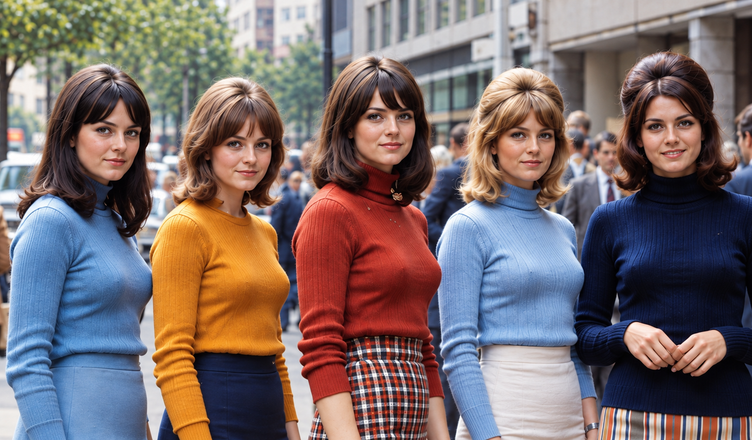
Sometimes the most intriguing detail in an old photograph reveals itself just as we are about to put it aside. We have studied the faces, smiled at the clothes, and found the setting familiar—then suddenly our eyes return to one small area. Something there does not fit the overall impression. But what, exactly?
That feeling lies at the heart of the mystery surrounding a picture presented as a photograph from the 1970s. At first glance, it appears to capture an ordinary moment from the past. The accompanying text invites us to look closer and find an unusual detail, yet it does not explain where that detail is or what makes it strange. Nor does it provide an explanation against which we can check our guesses.
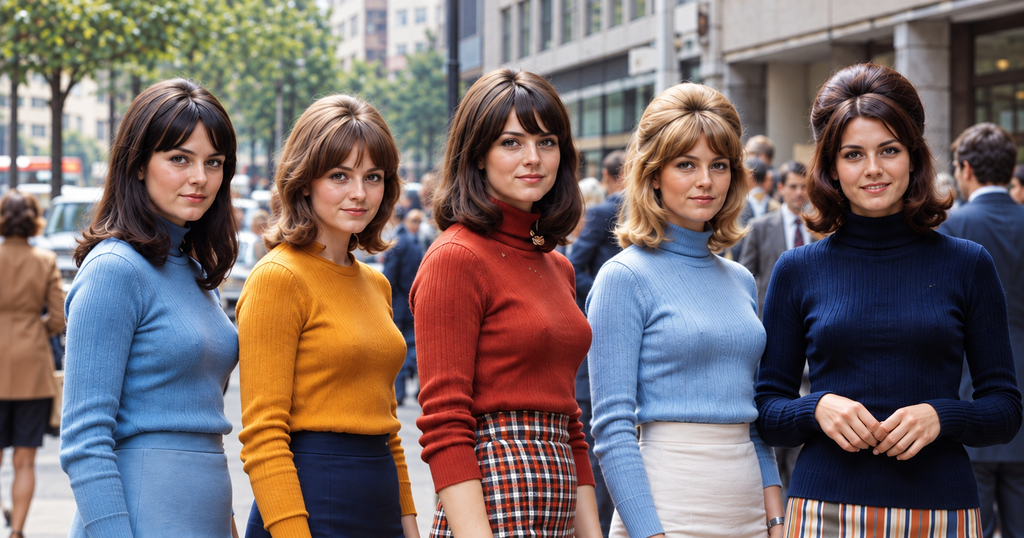
It is therefore useful to make a distinction from the outset: we are being offered a visual puzzle, but we do not yet have enough evidence to call it a historical sensation. That does not make the photograph less interesting. Instead, it gives us an opportunity to consider how we examine old pictures and why we sometimes see more in them than they can actually prove.
When a Hint Changes Our Perspective
Imagine the same photograph with two different captions. The first reads: “An ordinary day, many years ago.” The second says: “There is an unexplained detail hidden in this picture.”
The image has not changed, but the viewer’s task has. In the first case, our attention will probably settle on the people and the atmosphere. In the second, a search begins: an object in the background, the position of a hand, a reflection, an unfamiliar silhouette. Everything that previously seemed incidental becomes a possible clue.
There is pleasure in that search. It feels as though we have been invited to linger in someone else’s past and explore it for ourselves. But curiosity also brings a trap: when we expect something strange, it is easy to mistake something we simply do not understand for a mystery.
This becomes especially noticeable when the puzzle is loosely defined. If we do not know whether to look for an object, something inconsistent with the period, or an optical illusion, almost any unfamiliar detail can seem like the answer. One person confidently points to the background, another to the clothing, and a third notices something beside a face. Their confidence alone does not mean anyone has solved the puzzle.
The Past Was More Varied Than We Imagine
Each of us has a rough mental picture of the 1970s: certain hairstyles, clothing styles, colors, furniture, and everyday objects. That image comes from family albums, films, magazine covers, and a few particularly memorable photographs.
Yet an entire decade cannot be reduced to a single interior or style of dress. Objects appeared in different countries at different times, remained in use for years, and passed from older generations to younger ones. Items manufactured many years apart could stand side by side. One home retained its old furnishings while another already had newer appliances.
The thought “that looks too modern” can therefore be the beginning of a question, but not a final conclusion. Before declaring an object inconsistent with the period, we must at least identify it reliably. A blurry rectangle in someone’s hand does not become an electronic device simply because it resembles a screen familiar to us today.
The date of the photograph deserves the same care. A picture labeled online as being from the 1970s needs a supporting source: a family record, an archive description, a publication, or some other verifiable evidence. Its appearance may suggest a period, but it does not always establish an exact year.
How to Examine a Picture More Carefully
It helps to begin by looking at the photograph as a whole, without immediately selecting a suspicious detail. Where does the scene take place? What is closest to the camera? Which direction is the light coming from? Which objects overlap?
Next, examine the foreground, the middle of the image, and the background in turn. This approach helps prevent you from repeatedly returning to a single detail that the hint has already made especially tempting.
If something seems strange, describe it as literally as possible. For example, say “a dark area beside the shoulder” rather than “someone’s extra hand.” Or “a light-colored rectangular object” instead of naming something you cannot yet recognize. A precise description leaves room for several explanations.
The next step is to inspect the surrounding area. What appears to be a hand may belong to someone almost completely hidden behind another person. An unusual line may continue into a fold in a garment. An object in the background can seem to be part of a figure in the foreground if their outlines happen to align.
Enlarging the image also requires care. It can help reveal the details that are available, but it cannot recover information lost in a small or repeatedly compressed copy. If enlargement still produces only patches of color, those patches cannot reliably identify small objects.
Why One Strange Detail Is Not Enough
Even a genuinely unusual feature does not explain itself. Several questions usually stand between an observation and a conclusion.
Do we know where the photograph came from? Has the original survived? Was the image cropped before publication? Is a higher-quality version available? What does the photographer or the archive holding the picture say about it?
Without that information, a discussion can easily become a contest of imagination. This is especially true when every new suggestion receives equal weight: an accidental alignment of outlines, an incorrect date, and a dramatic theory about an unexplained phenomenon.
A more sensible approach is to move from what can be checked toward what remains unknown. First, establish what is clearly visible. Then consider possible explanations. Only afterward should we decide which explanation best fits the image and its origins.
For this particular puzzle, the honest answer remains open. The accompanying text promises a strange detail, but neither identifies it nor offers a verified solution. Inventing a specific answer would mean replacing careful observation with a story of our own.
Still, old photographs deserve a long look even without a sensational discovery. They preserve gestures, habits, arrangements of belongings, and passing moments that nobody considered important when the shutter clicked. Sometimes those details bring the past closer than formal portraits and commemorative dates ever could.
Perhaps closer examination will show that the puzzling detail has an entirely ordinary explanation. That need not diminish our interest in the photograph. We have already done something valuable: stopped letting our eyes skim across the image and begun to examine it. Often, that reveals more than the promise of a ready-made secret.