I used to buy three. I would leave one in the kitchen drawer, beside the packets of vanilla sugar and spare batteries. Nobody knew. Even my husband, who had lived with me for twenty-two years, thought I had long since learned to cope.
That morning, I threw the old candles away. Then I stood over the trash can for a long time, feeling as though I had betrayed someone.
Kirill’s voice came from the hallway.
“Mom, did you order something?”
A small box lay on the doorstep, wrapped in plain brown paper. No address, no sender’s name. A card was tucked beneath the string.
“Happy eighteenth birthday, my brothers.”
All I could take in was the number eighteen. The other words seemed to refuse to form a sentence.
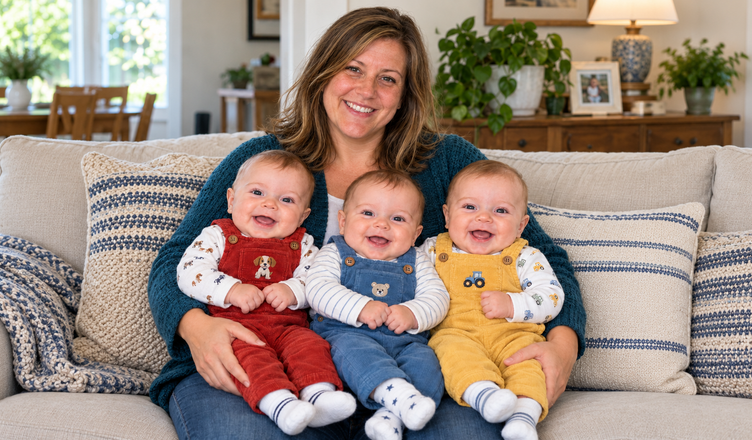
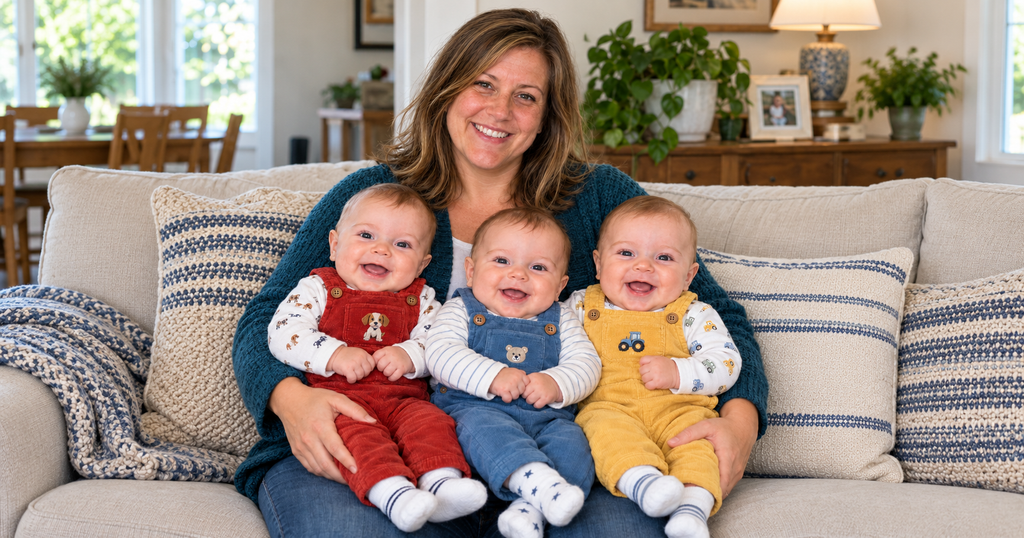
My boys were born in November. Kirill came first, then Andrei, and finally Misha.
Kirill screamed as though he already had complaints to make about the world. Andrei slept almost all the time. Misha was the smallest, and he gripped my finger tightly whenever I slipped my hand between the bars of his crib.
At four months old, he was taken to the hospital. At first, the doctors spoke to us about treatment, then about complications. I spent the final night on a chair in the corridor, clutching a bag of clean baby shirts in my lap.
My husband and I came home alone.
A week later, I asked him to remove the third crib. Sergei took it apart but didn’t carry it out of the apartment. He stacked the pieces behind the wardrobe. A few years later, we moved, and I never asked what had happened to them.
Kirill and Andrei knew about their brother. I answered their questions and showed them photographs. But the conversations were always brief.
“Did he look like me?” Andrei once asked.
“Like both of you.”
“What did he like?”
I said he had been too little to like anything yet. Then I went into the bathroom and turned on the tap.
Eventually, the boys stopped asking.
Inside the box were three wooden swallows. Two larger ones and a smaller one. Beneath them lay an envelope with my name on it.
Kirill turned the card over. Andrei carefully lifted out the little bird.
“Is this about Misha?” he asked.
I didn’t answer. I was already dialing my husband’s number.
Sergei arrived twenty minutes later. He looked at the swallows and sat down without taking off his jacket.
“I know who sent this.”
For a moment, the calmness in his voice frightened me.
“Then tell me.”
“My father.”
I stared at him.
Grandpa Pavel had died the previous winter. In his final years, he had lived in another city, called every Sunday, and sent his grandsons books. He always forgot which boy swam and which played the guitar.
“He left the box with his neighbor. Asked her to deliver it today.”
“And you knew?”
“I knew there would be a gift. I didn’t know what the card said.”
I felt angry. At my late father-in-law, at my husband, at that neatly tied string. The boys were eighteen today. There should have been friends, music, ridiculous photographs. Why had someone decided to take us back to that hospital corridor?
“Read the letter,” Sergei said quietly.
“Lena, forgive me for the message on the card. I spent a long time thinking about what to write, and I probably still chose badly.
The birds have been in my desk for almost eighteen years. I carved them when you brought the boys home. I wanted to make a mobile to hang above their cribs, but I couldn’t finish the little one. Its wing kept breaking.
Then Misha died. I put the work away and never went back to it.”
I picked up the little bird. One wing was slightly thicker than the other, and an uneven knife mark remained along its back.
“Last summer, Andrei came to fix my shelf. He found the birds and asked why there were three. I told him. He sat beside me for a long time, then asked if he could finish the little one.
We worked on it for two evenings. He said he wanted to give it to you, but he was afraid it would make you cry again.”
I looked at Andrei.
He lowered his eyes.
“I didn’t know about the box,” he said. “Grandpa promised he would talk to you himself.”
There were only a few lines left in the letter.
“I never got the chance to talk to you. Now I ask just one thing: tell them more about their brother. They know he died. But before that, he lived at home with you. You remember him better than anyone.”
The hum of the refrigerator drifted in from the kitchen.
“Is that why you asked what he liked?” I said to Andrei.
He nodded.
“I wanted to make the bird special somehow. I didn’t know how.”
Kirill sat beside me on the couch.
“You never told us we could remember him just because we wanted to.”
“But I showed you photographs.”
“Yes. Then you put the album away straight afterward.”
I wanted to argue. To say I had been protecting their childhood, that I hadn’t wanted to bring my pain into every family celebration. But the boys sat in front of me, waiting. For a story, not an explanation.
I ran my finger along the wooden wing.
“Misha wouldn’t fall asleep if the room was completely quiet,” I said at last. “I used to put a radio by the door. And he would grab my hair. Once, he held on so tightly that your dad spent about ten minutes freeing the strand from his hand.”
Sergei smiled.
“You told me to get scissors.”
“And you refused.”
“Because he would have let go on his own eventually.”
“He did. When he heard Kirill crying.”
Kirill raised his eyebrows.
“Was I already keeping everyone awake back then?”
We laughed. I did too—for the first time in the middle of a story about Misha.
Then I brought out the album. We looked at a photograph of all three boys lying across our bed. Andrei asked whose hand was in the picture. Sergei’s. Kirill noticed the striped socks and wanted to know why one baby was wearing a mismatched pair.
I remembered that too: the matching sock had gone missing in the wash.
Before the guests arrived, we put the album away and placed the swallows on the bookshelf. Andrei straightened the little one several times. Its uneven base made it wobble.
That evening, we brought out the cake with two candles. The boys made their wishes and blew them out together, then began arguing about who had finished first.
I watched them without trying to imagine another eighteen-year-old young man beside them. Misha remained the child I had known: a warm little hand, determined fingers, and mismatched socks.
After the guests had left, I found Kirill by the bookshelf. He was holding the little swallow while Andrei glued a piece of felt to its base.
“Now it won’t fall over,” he said.
By morning, all three birds stood straight.