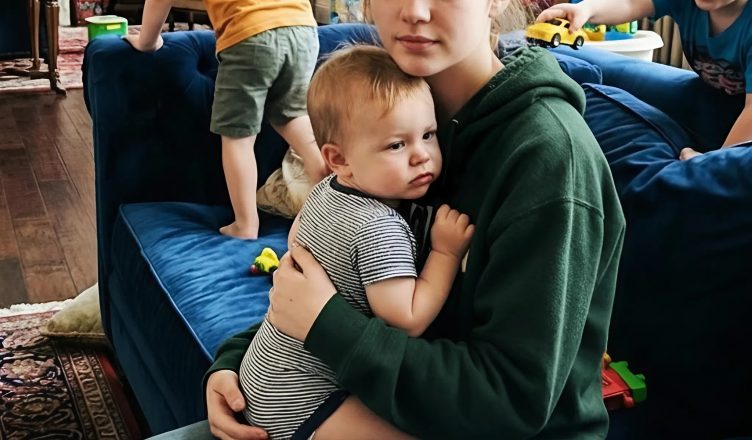
I listened to her to the very end.
She sat at the kitchen table, clutching that cursed check as if it might somehow turn into real money if she just held on a little longer. But the worst part wasn’t the money.
“Mom…” she whispered. “I did everything right…”
That’s when it hit me: this was never about $900.
It was about someone deciding my daughter had no value.
The next morning, I didn’t wait.
I asked Naomi to stay home and promised her, “This ends today.”
She looked at me with a mix of hope and fear. Deep down, she still wanted to believe it was all a mistake—that a grown, successful woman wouldn’t do something like this on purpose.
But I already knew the truth.
People like Julia don’t make mistakes like that.
They make choices.
I didn’t go to her house alone.
First, I made a few calls.
To the bank—to get official confirmation that the check was fake.
To a lawyer—who didn’t hesitate: “That’s fraud. Intentional fraud.”
And the third call was the most important.
When I pulled up to their house, I wasn’t alone.
Julia was just stepping out of her car—sunglasses on, perfectly put together, like her life was a glossy magazine cover.

But when she saw who was standing at her gate… she slowed down.
Then she noticed something else.
The camera.
And the people beside me.
“What is this supposed to mean?” Her voice wasn’t so confident anymore.
I stepped forward.
“It means that today, you’re going to explain why you gave a minor a fake check for two weeks of work.”
She let out a short laugh.
“This is ridiculous… there must be some misunderstanding…”
“Perfect,” I said calmly. “Then you won’t mind explaining it out loud.”
The camera moved closer.
And that’s when it clicked for her.
This wasn’t a conversation she could postpone.
This was now.
Right here.
In front of everyone.
At first, she tried to talk her way out of it.
She mentioned a “mix-up,” a “bank error,” a “simple confusion.”
But then I showed her the proof.
The confirmation.
The documents.
The facts.
And her expression changed.
Instantly.
Like a mask cracking.
“Fine…” she muttered. “It’s just money. I was going to pay.”
“When?” I asked quietly.
She went silent.
Because there was no answer.
There never had been.
Then something unexpected happened.
Her children ran out of the house.
Those same little boys Naomi had cared for.
They shouted happily:
“Where’s Naomi?”
And for the first time, Julia lowered her eyes.
Because even her own children knew the truth.
They knew who had really been there for them.
I took one final step.
“You didn’t just refuse to pay her,” I said softly. “You made her feel like her work meant nothing.”
The silence that followed was heavy.
Uncomfortable.
Real.
And in that silence, Julia broke.
“How much?” she asked under her breath.
“It’s not $900 anymore,” I replied.
An hour later, I was back home.
I placed an envelope in front of Naomi.
She opened it slowly.
And froze.
There was more.
Much more.
But it wasn’t about the amount.
She looked up at me.
“What is this for?”
I smiled.
“For not letting the world make you smaller.”
Later, she admitted she didn’t feel happiness.
She felt relief.
Because justice does exist.
Sometimes quiet.
Sometimes harsh.
But real.
And Julia?
Word is, she’s more careful now.
She pays upfront.
Always in cash.
Because there are things you can’t buy back.
Like your reputation.
Your integrity.
Or the ability to look someone in the eye after you’ve wronged them.
And my daughter?
She doesn’t trust everyone anymore.
But she’s still kind.
And that—that is her greatest strength.
A strength no one will ever take from her.