
After our daughter was born, I was certain the worst was behind us. I was wrong.
The delivery had been so difficult that I remembered parts of it only in fragments: the harsh light above me, doctors moving quickly around the room, short commands, and the cold creeping into my fingers. Then everything disappeared.
When I finally regained consciousness, it was already getting dark outside. The first person I saw was my husband. Daniel was sitting beside my bed, hunched forward with his face buried in his hands.
“Where’s the baby?” I whispered.
He immediately stood up.
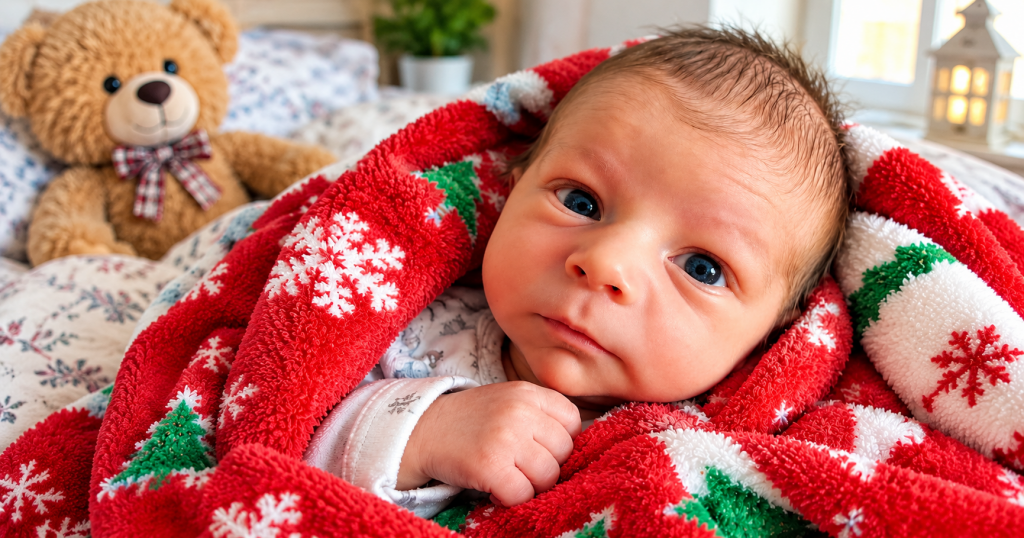
A few minutes later, a nurse brought our daughter into the room. She was tiny, wrapped in a white blanket, sleeping so peacefully that it seemed as though fear and pain had never existed around her.
We named her Emma.
I watched Daniel, waiting for the moment I had imagined so many times during my pregnancy. He would take our daughter in his arms, smile, and say something we would remember for the rest of our lives.
But something completely different happened.
When the nurse handed Emma to him, Daniel looked at our baby’s face and froze.
His smile vanished.
“What’s wrong?” I asked.
“Nothing.”
He quickly handed the baby back to me.
I assumed his reaction was caused by the stress of everything we had just been through. After all, he had almost lost his wife. Maybe he simply needed time to recover from the shock.
But after we returned home, Daniel began to change.
The first few weeks with a newborn were already filled with sleepless nights, so at first I barely noticed his strange behavior. He became increasingly quiet. He often sat alone in the kitchen after midnight, staring out the window. Sometimes someone would call him, and he would step outside to talk.
Then he began disappearing at night.
“Where did you go last night?”
“I couldn’t sleep. I just went for a drive.”
“For two hours?”
“I needed to clear my head.”
His explanation sounded strange, but I was too exhausted to argue.
One day, I found an old metal key in the pocket of his jacket. It clearly didn’t belong to our house or garage. When I asked him about it, Daniel visibly tensed.
“It’s from an old storage building.”
The next day, the key was gone.
Gradually, my anxiety became stronger than my exhaustion. I started wondering whether there was another woman. It was a painful explanation, but at least it made sense: the secret phone calls, the late-night drives, the constant tension.
Yet there was one detail that didn’t fit.
Whenever Daniel looked at Emma, something appeared in his eyes that I couldn’t understand. It wasn’t irritation or coldness.
It looked more like fear.
One rainy October evening, he left again. I heard the front door close, looked at the clock, and suddenly decided that I wasn’t going to wait for another lie.
My mother happened to be visiting us that evening and agreed to stay with the baby. I didn’t explain anything. I simply put on my coat, got into the car, and followed my husband.
Daniel didn’t drive toward downtown as I had expected. Instead, he turned onto an old road leading toward the outskirts of town.
About twenty minutes later, his car stopped in front of an abandoned two-story house.
I knew the place.
And that was exactly why I sat in my car for several seconds, unable to make myself get out.
The house had once belonged to Daniel’s family. His grandmother had lived there. After her death, the building had been left empty. Daniel almost never talked about it, and once he had told me that the property had been sold years ago.
So that had been a lie.
A faint light was glowing in one of the upstairs windows.
I went inside.
The hallway smelled of dampness and old wood. Somewhere upstairs, a floorboard creaked.
“Daniel?”
He appeared on the staircase.
When he saw me, he didn’t even try to invent an excuse.
“You shouldn’t have come here.”
“Then tell me why you’re here.”
He remained silent for several seconds.
Then he said:
“Because I’ve seen our daughter’s face before.”
I thought I had misheard him.
Daniel led me into a room upstairs. There were boxes, an old wardrobe, and a small table. An open photo album lay on top of it.
He took out a photograph.
It showed a little girl who looked about four years old.
I looked at the picture and then at my husband.
The resemblance to Emma was astonishing: the same eyes, the same shape of the chin, even a tiny dimple near her cheek.
“Who is she?”
“My sister, Clara.”
I had always believed Daniel was an only child.
At least, that was what everyone had told me throughout all the years of our marriage.
It turned out that he really had had an older sister. Clara had died in an accident when she was a child. After the tragedy, the family had almost completely stopped talking about her. Her photographs were put away, her room was closed, and years later Daniel’s parents moved away.
Daniel had been very young at the time, but some memories had remained.
When he first saw Emma’s face in the hospital, the resemblance was so striking that it felt as though he had suddenly been pulled back into his childhood.
“Why didn’t you tell me?”
“Because I was ashamed.”
“Of what?”
He didn’t answer for a long time.
That night, I learned another part of the story.
During the final months of her life, Daniel’s mother had started talking about Clara again. Before she died, she admitted to her son that she had blamed herself for what happened for many years. After her funeral, Daniel found a box in the house filled with letters, photographs, and his mother’s journals.
He couldn’t bring himself to throw them away.
But he couldn’t bring himself to read them either.
After Emma was born, the past suddenly returned. Daniel began coming to the old house, going through family belongings and trying to understand memories he had avoided for years.
“I was afraid to look at my own daughter,” he admitted. “Every time I saw her, I felt as though history might repeat itself. I knew it didn’t make sense, but I couldn’t get rid of the fear.”
I had expected to uncover an affair.
Instead, I discovered a family secret that several generations had tried to bury in silence.
But understanding the reason behind Daniel’s behavior didn’t mean the problem simply disappeared.
“You should have told me the truth,” I said. “I’m your wife. I don’t need you to protect me with lies.”
He nodded.
For the first time since our daughter’s birth, we talked until morning.
Not everything was fixed in a single night. Daniel had to admit that the fear he considered a weakness had already begun controlling his life. We agreed that we would no longer hide difficult subjects from each other, even when talking about them was painful.
Before long, the old house stopped being the destination of his secret nighttime trips.
We brought some of the family photographs home. Clara’s picture was among them.
When Emma grew a little older, the photograph stood in a small frame on a bookshelf. To our daughter, the girl in the old picture wasn’t a frightening secret or a bad omen. She was simply part of her family’s history.
Over time, I came to understand something.
Sometimes it isn’t the family secrets themselves that frighten us, but the silence surrounding them. Things that are forbidden to be discussed can gradually become larger and more terrifying in our minds than the events themselves. People try to bury painful memories in the hope of protecting the next generation, but sometimes they pass down a different kind of inheritance instead—an unexplained fear.
That rainy night, I followed my husband convinced that I was about to discover a truth that would destroy our family.
The truth did change many things.
But it didn’t destroy our marriage.
It broke down the wall of silence Daniel’s family had been building for decades.