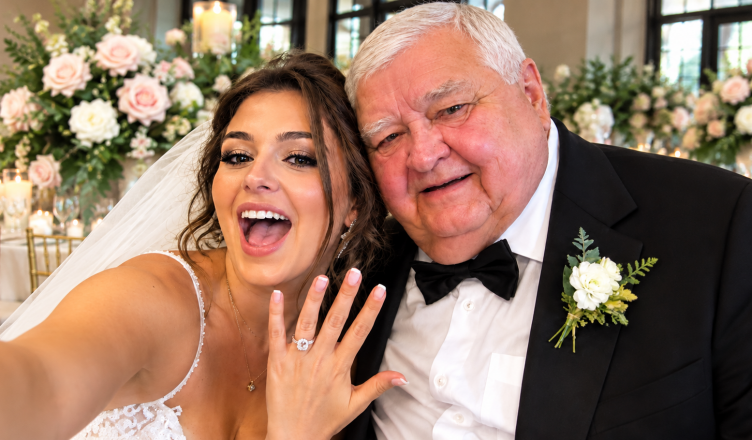
When Vera first met Arkady Sergeyevich, she was twenty-nine. He had recently turned seventy. The age difference between them was so striking that people around them barely tried to hide their surprise.
But Vera didn’t care.
Arkady was a wealthy man. He owned a large house outside the city, several apartments, investments, and a business that was now mostly managed by professionals. He never bragged about his money, but it was obvious that he would never have to worry about bills for the rest of his life.
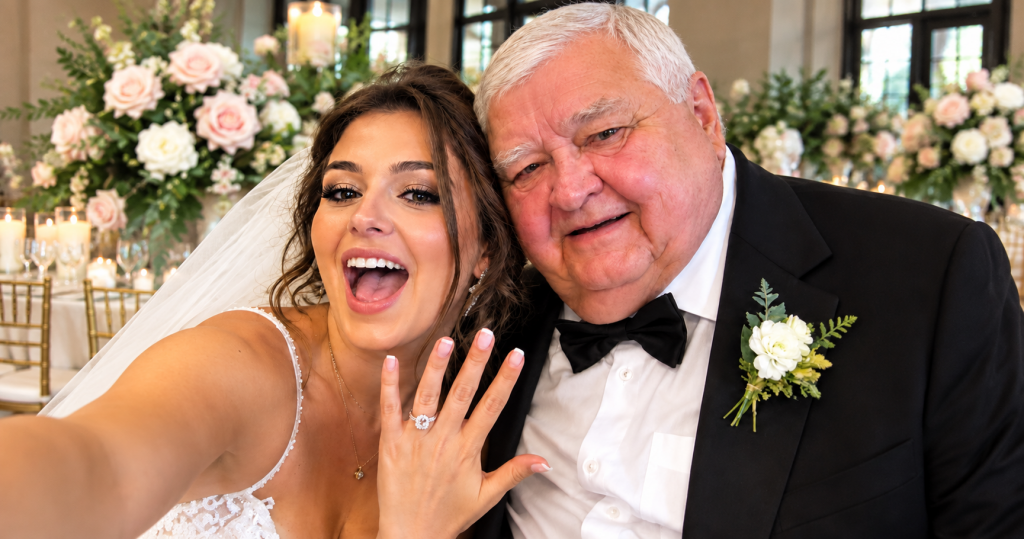
And that was exactly what attracted Vera.
She didn’t fall in love with him. At least, not at first.
Arkady turned out to be attentive, calm, and surprisingly tactful. He never tried to look younger than he was, never attempted to buy her affection with expensive gifts, and never asked questions she didn’t want to answer.
A year later, he proposed.
Vera said yes.
She knew perfectly well what people were saying behind her back. Some acquaintances considered her calculating, while others openly called her a fortune hunter. Vera pretended to be offended, although deep down she knew they weren’t far from the truth.
She believed this marriage would secure her future.
The first years of their life together were far more peaceful than she had expected. Arkady demanded very little from her. They traveled, entertained guests, and sometimes spent entire evenings in separate rooms, each occupied with their own interests.
Over time, Vera grew accustomed to her husband.
She brought him medicine when he was ill, accompanied him to medical appointments, chose his birthday presents, and even learned how to bake his favorite apple pie.
But one thought remained quietly in the back of her mind: one day, all of this would belong to her.
Arkady himself never spoke about inheritance.
Whenever Vera cautiously tried to bring up the future, he would smile and say:
“Don’t be in such a hurry to live your life after me. I’m still here.”
As the years passed, his health genuinely began to decline. First came shortness of breath, then heart problems. His doctors advised him to avoid physical strain.
One winter day, Arkady was taken to the hospital.
A few days later, he died.
At the funeral, Vera cried sincerely. That surprised even her.
Over the years, the man she had once viewed almost as a path toward financial security had become part of her life. Now the enormous house felt strangely empty.
After the funeral, Arkady’s lawyer approached her.
“Mrs. Vera, could you stay a little longer, please? Your husband left something specifically for you.”
A few hours later, they were sitting in the lawyer’s office.
He took out a small wooden box.
Vera felt a familiar rush of excitement.
Perhaps it contained property documents. Or the key to a safe-deposit box. Maybe jewelry.
The lawyer placed the box in front of her.
“Arkady Sergeyevich instructed me to give this to you personally after his funeral. He said he wanted to make sure you received exactly what you deserved.”
Something about those final words made Vera uneasy.
She opened the box.
There were no diamonds inside.
No money.
Instead, there was an old voice recorder and an envelope.
Vera’s hands went cold.
She recognized the device immediately.
Years ago, before the wedding, she had used a recorder like this for work. Then one day, it had mysteriously disappeared.
Inside the envelope was a short note:
“Listen to the recording first.”
Vera pressed the button.
A few seconds later, her own voice came through the speaker.
The recording had been made about a month before the wedding.
She was talking to a friend.
Vera remembered that evening. They had been sitting in the kitchen discussing her upcoming marriage. She had calmly admitted that she didn’t love Arkady and was marrying him for his money.
But the worst part was still to come.
On the recording, Vera laughed and said:
“I’ll put up with it for a few years. Then I’ll be financially secure for the rest of my life.”
She switched off the recorder.
The room fell silent.
“He heard this?” she asked.
The lawyer nodded.
“According to your husband’s instructions, he found the recording before your wedding.”
Vera stared at him.
“Then why did he marry me?”
“I don’t know. But he left you a letter.”
She unfolded another sheet of paper.
It was written in Arkady’s handwriting.
He explained that he had indeed discovered the recording shortly before their wedding. His first instinct had been to cancel the ceremony. But then he decided not to say anything.
He wanted to see what kind of life they would actually build together.
During the first few years, he had no doubt that Vera remained with him because of his money. Gradually, however, he began noticing things that could no longer be explained by self-interest alone.
After an operation left him unable to get out of bed without assistance for nearly a month, Vera refused to hire a full-time caregiver and spent most of her time looking after him herself.
When he became seriously ill during a trip, she barely slept for several nights.
And when the doctors warned her that his condition was becoming more serious, she never once asked about his will.
At the end of the letter was a single sentence:
“I knew why you came into my life. But I also saw why you stayed.”
Vera stared at those words for a long time.
Meanwhile, the lawyer placed a folder in front of her.
It turned out that Arkady had indeed changed his will.
A large portion of his fortune had been directed to a charitable foundation, while another part went to his children from his first marriage. Several properties were left to other relatives.
Vera inherited the house where they had lived together and enough money to live comfortably.
But it was nowhere near the enormous fortune she had once expected.
There was, however, one more document in the folder.
Arkady had established a small foundation to help elderly people living alone. Vera could become its director if she chose to accept the position. The job came with a salary, but the foundation’s money could not be used for personal purposes.
It wasn’t a punishment.
Nor was it exactly a reward.
It was an offer.
Vera returned home late that evening.
She walked slowly through the rooms where her husband’s belongings remained exactly where he had left them: his glasses beside the armchair, a bookmark inside the book he had been reading, a cup on his desk.
Years ago, Vera had entered this house imagining the day when she would become its sole owner.
Now that day had finally arrived.
But she felt no joy.
She turned on the old recording once more and listened to the voice of a young woman who had believed that a few years of life beside another person could simply be exchanged for wealth.
Vera barely recognized herself.
The following morning, she called the lawyer.
“What do I need to do to accept the position at the foundation?”
“Are you sure?”
Vera looked at Arkady’s photograph on the shelf.
“No,” she replied. “But I think I should try.”
A few months later, the house no longer felt quite so empty.
Vera did not suddenly become a completely different person, nor did she try to convince anyone that money had never mattered to her. It had mattered. Money was the reason their relationship had begun.
But it had ended for an entirely different reason.
In the end, the most valuable inheritance was neither the house nor the money in the bank.
Arkady had left her proof that he had known the truth from the very beginning — and had still given her years to decide for herself what kind of person she wanted to become.
The small wooden box remained in the bottom drawer of his desk.
Vera never threw it away.
Sometimes, one painful reminder of the past is enough to make sure we never return to who we once were.