My daughter, Laura, used to call me almost every day. Sometimes our conversations lasted half an hour; sometimes they were only a few minutes long. She might ask me for a cake recipe, complain about the weather, or simply tell me that she had bought new curtains. Even after she got married, that habit never changed.
That was why I noticed immediately when the calls suddenly stopped.
At first, I didn’t think too much of it. Laura had a job, a home, a husband, and responsibilities of her own. I understood perfectly well that an adult daughter didn’t have to report to her mother every day.
After three days, I called her myself.
“Mom, everything’s fine. I’m just incredibly busy with work right now.”
Her voice sounded calm, but the conversation ended much faster than usual.
A few days later, I tried again. Laura didn’t answer. Late that evening, I received a message:
“Sorry, today was crazy. I’ll call you tomorrow.”
She didn’t call the next day.
Almost four weeks passed like that.
We spoke a few times, but each time my daughter found a reason to end the conversation after barely a minute. Sometimes she was making dinner. Sometimes she was about to take a shower. Other times she said she had to get up early the next morning.
But something else bothered me even more. Laura used to tell me about even the smallest details of her life. Now, whenever I asked how she was doing, her answer was always the same:
“Everything’s fine.”
A mother’s worry rarely begins with one dramatic event. More often, it grows from small details. An answer that is too short. A pause before the familiar words, “Everything’s fine.” A promise to call back that remains unfulfilled again and again.
Still, I tried not to interfere.
Laura was married to Andrew. They had been together for five years. I had never considered him a bad person. He was reserved and somewhat private, but he had always treated me with respect. I didn’t want to become the kind of mother who imagined a family disaster behind every unanswered phone call.
But one evening, my anxiety became too strong to ignore.
I called my daughter three times. Her phone was switched off.
Andrew wasn’t answering either.
I grabbed my car keys and drove to their house.
I didn’t tell anyone I was coming.
When I arrived, the lights were on inside. Andrew’s car was parked outside, so at least I knew he had to be home.
I rang the doorbell.
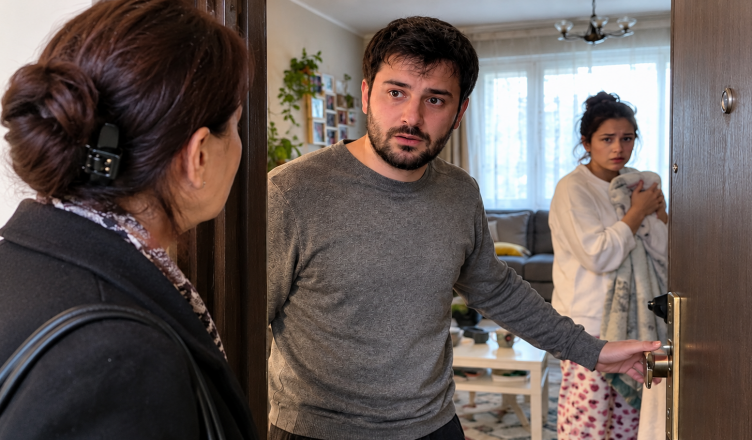
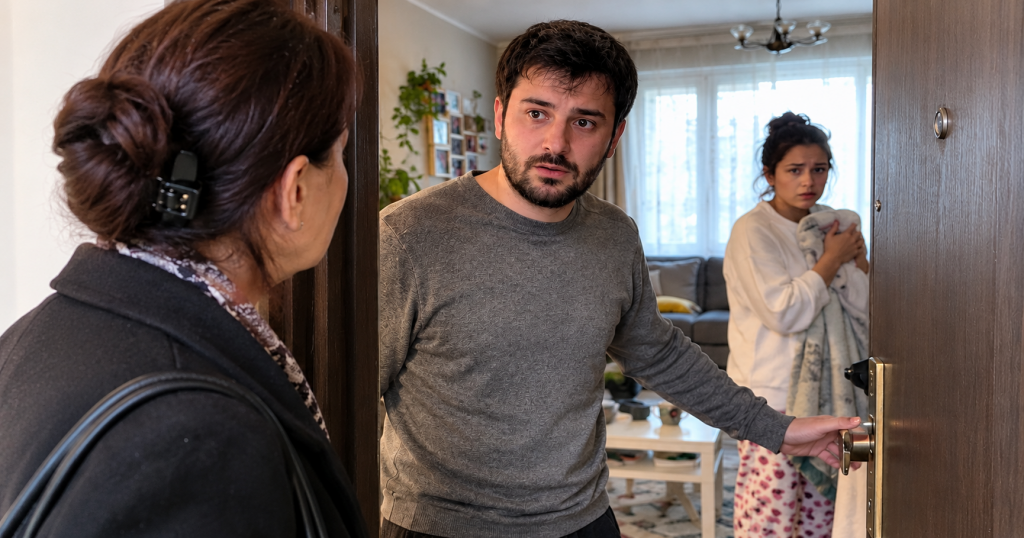
Andrew opened the door.
The moment he saw me, he looked visibly unsettled.
“Why didn’t you call before coming?”
“I did call. Nobody answered. Where’s Laura?”
He hesitated.
That brief pause frightened me more than anything else.
I was about to repeat the question when I heard my daughter’s voice from somewhere inside the house.
“Mom?”
I looked over Andrew’s shoulder and stopped asking questions.
Laura was standing in the hallway with one hand pressed against the wall for support. She was very pale, had clearly lost weight, and looked nothing like the energetic woman I had seen a month earlier.
There was a walker beside her.
I moved past Andrew and rushed toward my daughter.
“What happened?”
Laura burst into tears.
Three weeks earlier, she had been involved in a car accident. At first, it seemed that she had escaped relatively unharmed, and her life had never been in danger. But the injury to her leg turned out to be more serious than they had initially believed. She needed treatment, and her recovery was progressing slowly.
“Why didn’t you tell me?”
She remained silent for a long moment.
Then she answered:
“Because I knew you would come.”
For a few seconds, I didn’t even understand what she meant.
“Of course I would have come.”
“Exactly.”
A few months earlier, I had gone through a difficult period myself and had only recently returned to my normal life. Laura was afraid that if I learned about the accident, I would drop everything and come to her house every day. So she decided that she and her husband would manage on their own.
Andrew respected her decision.
They agreed not to tell me about the accident until Laura was feeling better.
At first, my daughter genuinely believed she would be walking normally again within a week. Then the second week passed, followed by the third. Hiding the truth from me became increasingly difficult.
That was exactly why she had stopped calling.
“I couldn’t talk to you the way I normally do,” Laura admitted. “You would have known immediately that something was wrong.”
I didn’t know whether to be angry with her or hug her.
I think I did a little of both.
We sat in the kitchen and talked for a long time. For the first time, I heard everything that had happened over the previous weeks: the sleepless nights, the pain, the fear, the doctor’s appointments, and Andrew’s exhaustion.
He really had taken almost everything upon himself. He cooked, cleaned, and helped his wife move around the house.
And that was when I realized something else.
When I had seen the nervous expression on Andrew’s face at the door, it had taken only seconds for me to imagine the worst. I had even wondered whether he was somehow preventing my daughter from communicating with me.
The truth was completely different.
Andrew had simply been respecting his wife’s wishes.
“I told her several times that we should tell you,” he admitted. “But Laura didn’t want to.”
My daughter looked at me guiltily.
I didn’t start an argument. It wouldn’t have changed anything.
Instead, I simply said:
“Never do this to me again.”
She nodded.
But the experience made me think about a phrase we often use with the best intentions: “I don’t want to worry my family.”
Sometimes we believe that hiding the truth is a way of protecting the people we love. In reality, uncertainty can cause far more anxiety than unpleasant news.
There is another side to it, of course. Parents of adult children have to learn to respect their boundaries. We cannot demand daily reports or assume that every change in behavior means something terrible has happened. Adults have the right to privacy and to make their own decisions.
But closeness is not built on control.
It is built on trust.
I stayed at my daughter’s house that evening. I made dinner, put away some things Andrew hadn’t had time to organize, and for the first time in a month, Laura and I sat together and quietly drank tea.
We agreed on one simple rule: if something serious happens, we will tell each other the truth. We don’t have to immediately ask for help. We don’t have to share every detail. But leaving someone who loves us wondering for weeks about what is happening is not a good way to protect them.
A few weeks later, Laura was already moving around the house much more confidently. Our regular phone calls returned as well.
Now, whenever my daughter says:
“Mom, everything’s fine. I’ve just been busy,”
I sometimes smile and ask:
“Are you sure everything is really fine?”
She knows why I ask.
“Yes, I’m sure. And if one day it isn’t, I’ll tell you.”
After that evening, those were exactly the words I needed to hear.