When I told my son that he, his wife, and their children had to leave my house by the following evening, at first he thought I was speaking out of anger.
“Mom, you do realize we have nowhere else to go, don’t you?”
I did. That was exactly why I had spent almost two years putting up with a situation that was gradually turning my own life into a nightmare.
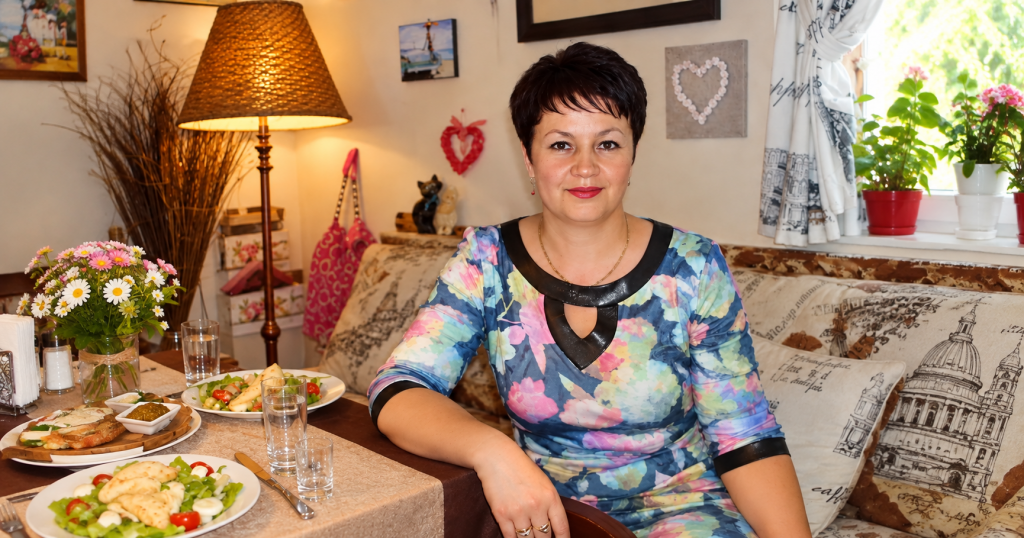
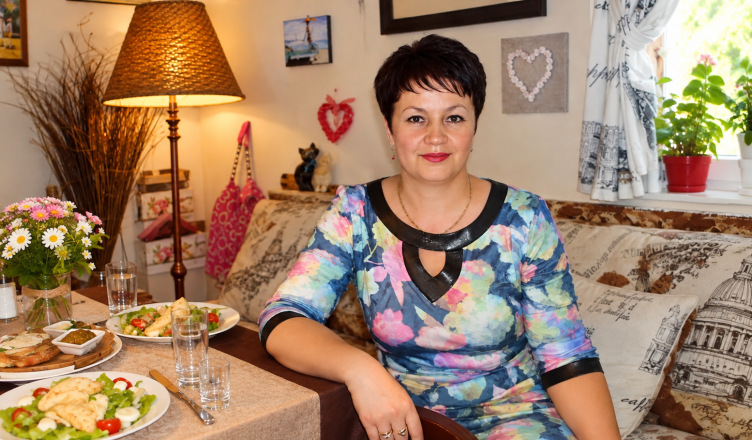
I am sixty-four years old. My husband and I built this house together many years ago. After he passed away, I remained here alone. Three bedrooms, a small living room, a kitchen, and a garden—it was probably more space than one person needed.
So when my son Anton called and told me he had lost his job and could no longer afford the rent on his apartment, I was the one who suggested that he move in with me temporarily. His wife, Marina, and their three children came with him.
We agreed that the arrangement would last only a few months. Anton would find another job, they would save some money, and then they would rent a place of their own again.
At first, everything really did go well.
The house came alive again. In the mornings, the children ran through the hallway, and in the evenings, we all gathered around the large dining table. I enjoyed cooking for my grandchildren, helping them with their homework, and listening to their endless stories.
But three months passed, then six.
Anton found another job, yet nobody mentioned moving out anymore.
When I cautiously asked what their plans were, my son replied:
“Mom, why should we waste money on rent? There’s plenty of room here.”
It sounded reasonable. So I agreed to give them more time.
That was when everything began to change.
First, the usual household rules disappeared. Marina stopped asking whether she could invite people over. Sometimes I would come home and find complete strangers sitting in my kitchen.
Then they rearranged the furniture in the living room without asking me. My old cabinet was moved into the garage because, according to them, it ruined the look of the room. Some of my late husband’s belongings were packed away in boxes.
That was when I finally objected.
“This is my house. Why don’t you discuss any of this with me?”
Anton simply shrugged.
“Mom, we’re family.”
Gradually, that sentence became an excuse for everything.
I started feeling more like a guest than the owner of my own home.
Even then, however, I wasn’t thinking about asking them to leave.
The turning point came completely by accident.
One evening, I overheard my son and daughter-in-law talking in the kitchen. They thought I had already gone to sleep.
Marina said it was time to finally “settle the issue with the house.” Anton replied that they shouldn’t rush and that they needed to gradually persuade me to sign the necessary documents.
At first, I didn’t even understand what they were talking about.
The next day, I asked my son directly.
He was visibly uncomfortable, but he didn’t deny it. It turned out that they were planning to suggest that I transfer ownership of the house to Anton. In their minds, it made sense because one day the property would probably belong to him anyway.
I refused.
My son was offended.
For the next several weeks, a heavy silence hung over the house.
Then something happened that finally exhausted my patience.
I was looking for insurance papers in my desk drawer when I noticed a folder I had never seen before. Inside were printed photographs of my house, an estimate of its value, and calculations for a possible loan secured against the property.
I didn’t make a scene that evening.
The next morning, I waited until the children had left for school. Then I placed the folder in front of my son.
“Explain this.”
Anton remained silent for a long time.
Eventually, he admitted that he and Marina had been considering starting a small business. They needed money, and the house seemed like the most valuable asset available to the family.
“We weren’t going to do anything without your permission,” he said.
But by then, it was no longer just about the documents.
I remembered everything that had happened over the previous months: the furniture moved without my permission, my husband’s belongings pushed into the garage, the constant remarks about the house being too large for me, the references to my age, and the suggestions that I should move into a smaller apartment.
Each incident on its own could have been explained as concern or an ordinary family disagreement.
Taken together, however, they looked very different.
I asked them:
“Do you want me to sell the house?”
Marina answered first.
“You really don’t need this much space for yourself.”
It was the word “need” that finally settled everything for me.
They were discussing my life as though they already had the right to decide how I should live it.
I calmly said:
“You have one day to pack your things.”
Anton jumped up from his chair.
He told me I was being cruel. He reminded me that he had three children and said I couldn’t throw my own family out over one disagreement.
But this wasn’t one disagreement.
I had allowed them to live with me because I wanted to help. I was willing to share my money, my time, and my home. But gradually, they had started treating my help as an obligation and my house as property whose future they could plan without me.
The next day, they left.
The children cried, and that was the hardest part of all. I knew perfectly well that none of this was their fault. That was why I had already arranged with my sister for my son’s family to stay with her for a few days while Anton found temporary accommodation.
But Anton told our relatives a very different version of the story.
According to him, his mother had suddenly thrown her son, daughter-in-law, and three grandchildren out onto the street.
For several days, my phone barely stopped ringing.
One relative called me heartless. Another said that no normal mother would ever do something like that to her own child.
I didn’t try to justify myself to everyone.
A few weeks later, Anton rented a small apartment. We barely spoke to each other. I continued seeing my grandchildren, although at first even that was difficult.
Several months passed before my son came to see me again, alone.
He didn’t ask to move back into the house.
We sat in the kitchen for a long time. For the first time in months, he admitted that he had become too accustomed to treating my help as something he was automatically entitled to. The idea of using my house to solve his financial problems had seemed natural to him because he had gradually stopped seeing the boundary between what belonged to the family and what belonged to me personally.
I admitted my own mistake as well.
I should have established clear boundaries much earlier instead of remaining silent until all my frustration turned into an ultimatum.
We didn’t repair our relationship in a single conversation. Things like that rarely disappear overnight.
But gradually, our relationship began to recover.
I still live in my house.
My husband’s photographs are back where they used to be. I even brought the old cabinet back from the garage, although I have to admit that it really doesn’t match the newer furniture.
Some relatives still remind me of that day.
I don’t claim that I handled everything perfectly. Perhaps I should have given my son a week instead of a single day. Perhaps we should have had a serious conversation much earlier.
But there is one thing I do not regret.
Helping the people you love does not mean giving up the right to make decisions about your own life. Family members can count on support, but support stops being an act of kindness when someone begins to treat it as something they are automatically owed.
Sometimes the hardest word you have to say to someone you love isn’t “goodbye.”
Sometimes the hardest word is simply “no.”